iPad Battery
iPad Battery Draining Fast? Why It Happens and How to Fix It
An iPad that suddenly drains faster than it used to is usually either working harder than you realise or running on a battery that has worn out. Software causes such as background refresh, high brightness, a stuck app or a weak Wi-Fi signal can be fixed in Settings. An ageing or damaged battery cannot, and the fix is replacement. Here is how to tell which one you have.
Your iPad used to last days between charges. Now it needs the cable every evening, or the percentage falls off a cliff in the middle of a film, or it dies at 20 percent without warning. Nothing obvious changed, so what is going on?
In our experience the answer splits fairly evenly. Half the time software is keeping the iPad busy when it should be idle, and a few settings changes bring the old battery life back. The other half, the battery has reached the end of its useful life and no setting will help. Software causes come first below, because they are free to fix; then how to recognise a battery that needs replacing.
What Normal iPad Battery Life Looks Like
Apple rates most iPads at around ten hours of active use on Wi-Fi, a little less on cellular, and in standby a healthy iPad loses only a few percent a day. If you are getting eight or nine hours of real use from a full charge, the battery is doing what it was designed to do, and heavier use is the explanation.
What is not normal: losing 10 to 20 percent overnight while untouched, dropping from 40 percent to empty in minutes, shutting down with charge still showing, or getting only two or three hours of light use. Those patterns point to a process running flat out or a battery that can no longer deliver its rated capacity.
Software and Settings That Drain an iPad
Background App Refresh
With refresh enabled, apps wake in the background to fetch new content. Each wake is small, but dozens of apps doing it all day adds up, and it is the most common software cause of drain on an iPad that sits idle most of the time.
Screen brightness and always on features
The display is the largest power draw in any iPad, and full brightness can use twice the power of a moderate setting. Features that keep the screen or its sensors active, such as Raise to Wake, Hey Siri listening and notification previews lighting the display, all eat into standby time.
An old version of iPadOS
Battery drain bugs are common in the first release of a new iPadOS version and are usually corrected in the point updates that follow. Running an out of date system can cost real battery life for no visible reason.
An app stuck in a loop
Occasionally an app crashes in a way that leaves it running flat out in the background, retrying a sync or download endlessly. The iPad gets warm while apparently doing nothing and the battery empties in hours. The Battery screen in Settings usually exposes the culprit as an app with far more background time than makes sense.
Searching for a weak Wi-Fi signal
At the edge of a Wi-Fi network the radio keeps boosting power and reconnecting. An iPad used in a garden, a back bedroom or a cafe with patchy coverage drains far faster than the same iPad next to the router.
A cellular iPad hunting for signal
Cellular iPads add a second radio that behaves the same way. In poor coverage, or with a SIM from a lapsed plan, the modem searches continuously for a network, and that search can drain the iPad overnight even when Wi-Fi is available. Turning cellular data off when you do not need it removes the problem.
Hardware Causes: When the Battery Itself Is the Problem
An ageing battery
Every lithium ion battery wears with use. Apple designs iPad batteries to retain up to about 80 percent of their original capacity after around 1,000 complete charge cycles, where a cycle is one full discharge and recharge added up across however many partial charges it took. An iPad charged nightly for three or four years is well into that range, and as capacity falls the percentage display also becomes less accurate: it can sit at 30 percent for an hour and then collapse.
Newer iPads on a recent iPadOS show a Battery Health screen in Settings with a maximum capacity figure and, on some models, a cycle count. Older iPads do not, so the practical test is behaviour: an iPad in daily use for several years that now needs charging more than once a day is almost always showing battery wear.
A battery damaged by a drop or heat
A hard drop can damage the internal structure of a battery with no visible sign outside. Heat is worse: an iPad left in a hot car or on a sunny windowsill accelerates the chemistry that wears a battery out. Either can turn a battery that was fine last week into one that drains in a couple of hours or shuts the iPad down under load.
How to Check What Is Using the Battery
Open Settings and tap Battery. The graph shows charge level over the last 24 hours or 10 days, and beneath it each app is listed with its share of use, screen time and background time. Three things to look for:
- An app with a large share of battery but almost no screen time. It is working in the background and is a candidate for turning off refresh or reinstalling.
- A steep, steady downward line while the iPad was idle overnight. Something is running continuously: a stuck app, a radio hunting for signal, or a system process in a loop.
- A line that drops in sudden steps or jumps around. The battery is no longer reporting its charge accurately, which is wear rather than software.
If Battery Health is available, a maximum capacity under about 80 percent, combined with the drain you are seeing, is a clear signal that replacement is the fix.
What You Can Safely Try
Restart the iPad
A plain restart clears a stuck app or runaway process. Hold the top button (and a volume button on models without a Home button) until the slider appears, slide to power off, wait ten seconds and turn it back on.
Update iPadOS
Go to Settings, General, Software Update and install anything waiting. Battery drain bugs are frequently fixed in point updates. Plug in first if charge is low.
Trim Background App Refresh
In Settings, General, Background App Refresh, turn it off for anything you do not need updated while you are away. Email, messaging and apps with live notifications can stay on.
Lower the brightness and enable Auto Brightness
Drag brightness in Control Center to a comfortable level and make sure Auto Brightness is on under Accessibility, Display and Text Size. Turn off Raise to Wake if you rarely use it.
Fix the radios
Turn Wi-Fi off when away from a usable network. On a cellular iPad, turn cellular data off unless you are using it, and remove a SIM from a lapsed plan so the modem stops searching.
Deal with a stuck app
If the Battery screen shows one app with heavy background use, force quit it, and if it repeats, delete and reinstall it.
Reset settings only
As a last software step, Settings, General, Transfer or Reset iPad, Reset, then Reset All Settings. This returns every setting to default without deleting apps or data.
Give the iPad two or three days. If battery life is back to normal, the cause was software. If it still needs charging more than once a day, or drops in sudden steps, the battery has worn out.
What Not to Do
- Do not install third party battery apps that promise to calibrate, boost or repair the battery. iPadOS gives apps no access to do that, and some drain the battery themselves.
- Do not run the iPad to zero and leave it flat to "reset" the battery. Deep discharge is one of the most damaging things you can do to a lithium ion cell.
- Do not leave the iPad charging in a hot car, on a bed or under a pillow. Heat while charging accelerates wear faster than anything else.
- Do not use unbranded chargers or damaged cables. Poorly regulated power stresses the battery and charging circuit.
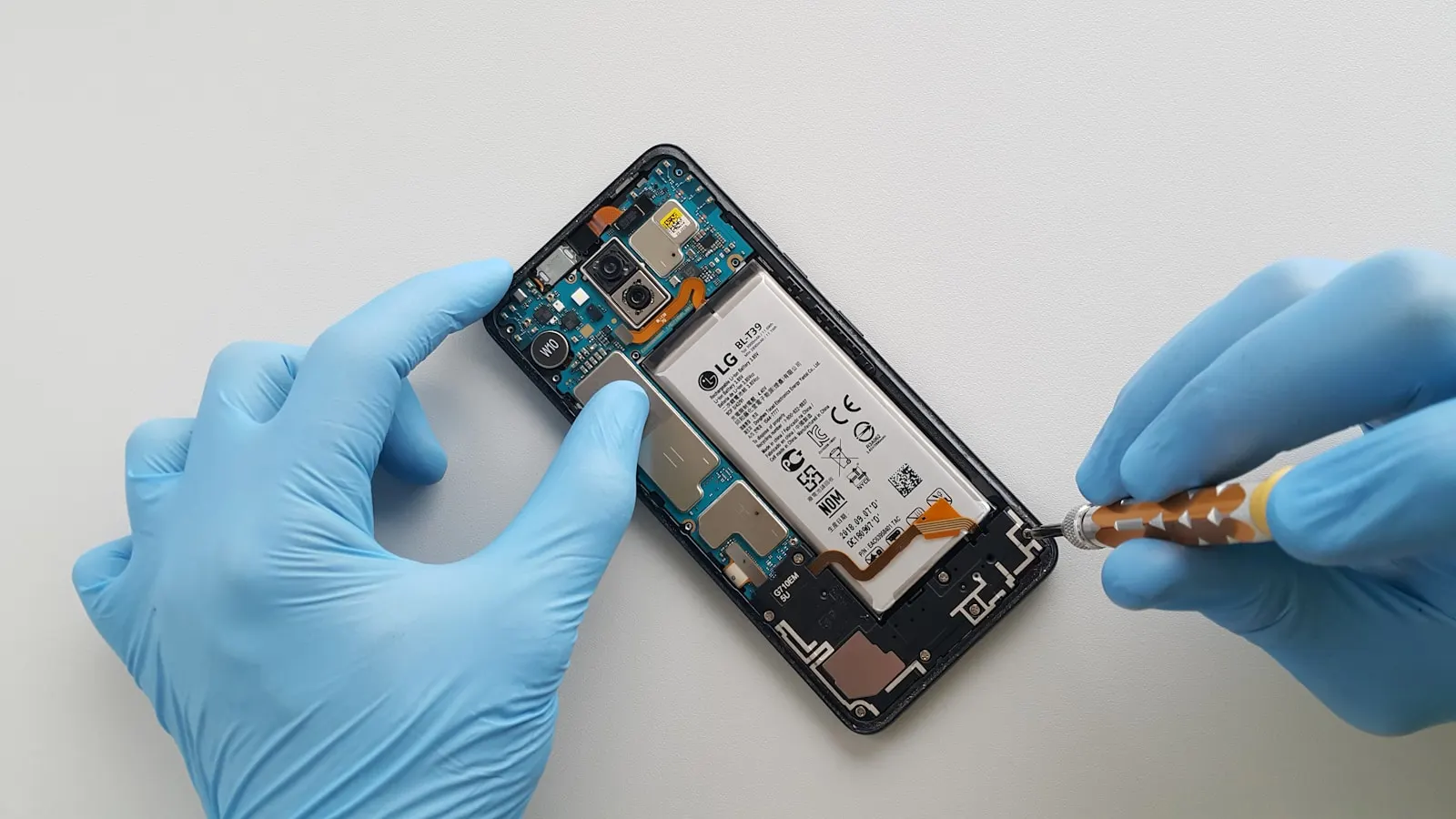
- Do not open the iPad or replace the battery yourself. iPad batteries are glued in and dangerous if punctured or bent.
- Do not keep charging an iPad that is warm to the touch, bulging, or lifting at the screen edge.
When to Get Professional Help
Come in when the software steps have made no difference, when the iPad shuts down with charge remaining, when the percentage jumps around, when it gets warm doing nothing, or when it is three years old or more and battery life has fallen noticeably. Come in straight away if drain started after a drop or overheating, or if there is any sign of swelling.
A technician can read the real capacity and cycle count from the battery itself, whatever your iPad shows in Settings, and check that the charging port and power circuitry are not part of the problem. That takes the guesswork out of whether a new battery will help.
Is a Battery Replacement the Answer?
When the battery is worn, yes, and it is one of the most worthwhile iPad repairs. A new battery restores original run time, fixes the sudden shutdowns and the inaccurate percentage, and often makes the iPad feel quicker because iPadOS no longer throttles performance to protect a weak cell. Most iPads have years of software support and hardware life beyond the point where the first battery gives out.
Replacing the whole iPad makes more sense only when the battery is one of several faults, when the model no longer receives iPadOS updates, or when liquid or drop damage has reached the logic board. If the iPad otherwise does everything you need, a battery replacement is almost always the cheaper choice.
How CELLTECH Handles iPad Battery Replacement
Bring the iPad to any CELLTECH store and describe what you are seeing. We run a free diagnostic first, checking battery capacity, charging behaviour and software, and only then recommend a repair. Our iPad repair service covers battery, charging and power faults on iPad, iPad mini, iPad Air and iPad Pro models.
If the battery has worn out, we quote the price before any work begins. An iPad battery replacement is often completed the same day when the battery for your model is in stock, and qualifying repairs are covered by our 90 day malfunction warranty. Your data stays on the iPad throughout.
Where to Get Your iPad Battery Replaced
CELLTECH has seven walk in stores across Texas, six in the Dallas and Fort Worth area and one in El Paso. Stonebriar Centre in Frisco and North East Mall in Hurst are two of them. The store finder shows the rest. Walk ins are welcome; booking ahead lets us confirm the battery for your exact model is on hand.
Frequently Asked Questions About iPad Battery Drain
Something is running while the screen is off: Background App Refresh, a stuck app retrying a sync, a weak Wi-Fi or cellular signal keeping the radios busy, or a worn battery that can no longer hold its charge. Check the Battery screen in Settings for background activity, then restart and update the iPad. If overnight loss continues on an iPad that is several years old, the battery is the likely cause.
Newer iPads on a recent iPadOS show Battery Health under Settings, Battery, with a maximum capacity percentage and sometimes a cycle count. Older iPads do not show this. For those, the Battery screen still shows usage by app, and a technician can read the actual capacity and cycle count from the battery during a free diagnostic.
Apple designs iPad batteries to retain up to about 80 percent of their original capacity after around 1,000 complete cycles. In everyday use that is typically three to five years, depending on how often the iPad is charged and how hot it gets. Below roughly 80 percent, run time falls noticeably and the percentage display becomes unreliable.
A worn battery cannot deliver enough current under load even when it still holds some charge, so the iPad shuts itself down to protect the electronics. The percentage shown is also an estimate that gets less accurate as the battery ages. Sudden shutdowns with charge remaining are one of the clearest signs that the battery needs replacing.
No. iPadOS does not allow apps to read or adjust the battery controller, so an app claiming to calibrate or repair an iPad battery cannot do what it says. At best it does nothing; at worst it runs in the background and drains the battery further. The only way to restore capacity to a worn battery is to replace it.
No. A battery replacement does not involve the storage in the iPad, so your apps, photos and settings stay exactly as they were. We still recommend keeping an iCloud or computer backup as a habit, but it is not required for the repair.
Get the Battery Life Back
Run through the software steps first; they are free and solve a good share of fast drain. If the iPad still cannot get through a day, the battery is done, and no setting will change that.
Bring it in for a free diagnostic and a clear quote. Book an iPad battery appointment or find a CELLTECH store near you and walk in whenever suits.
Related guides: why your phone battery drains faster than before, iPad charging problems explained and iPad screen not responding.